


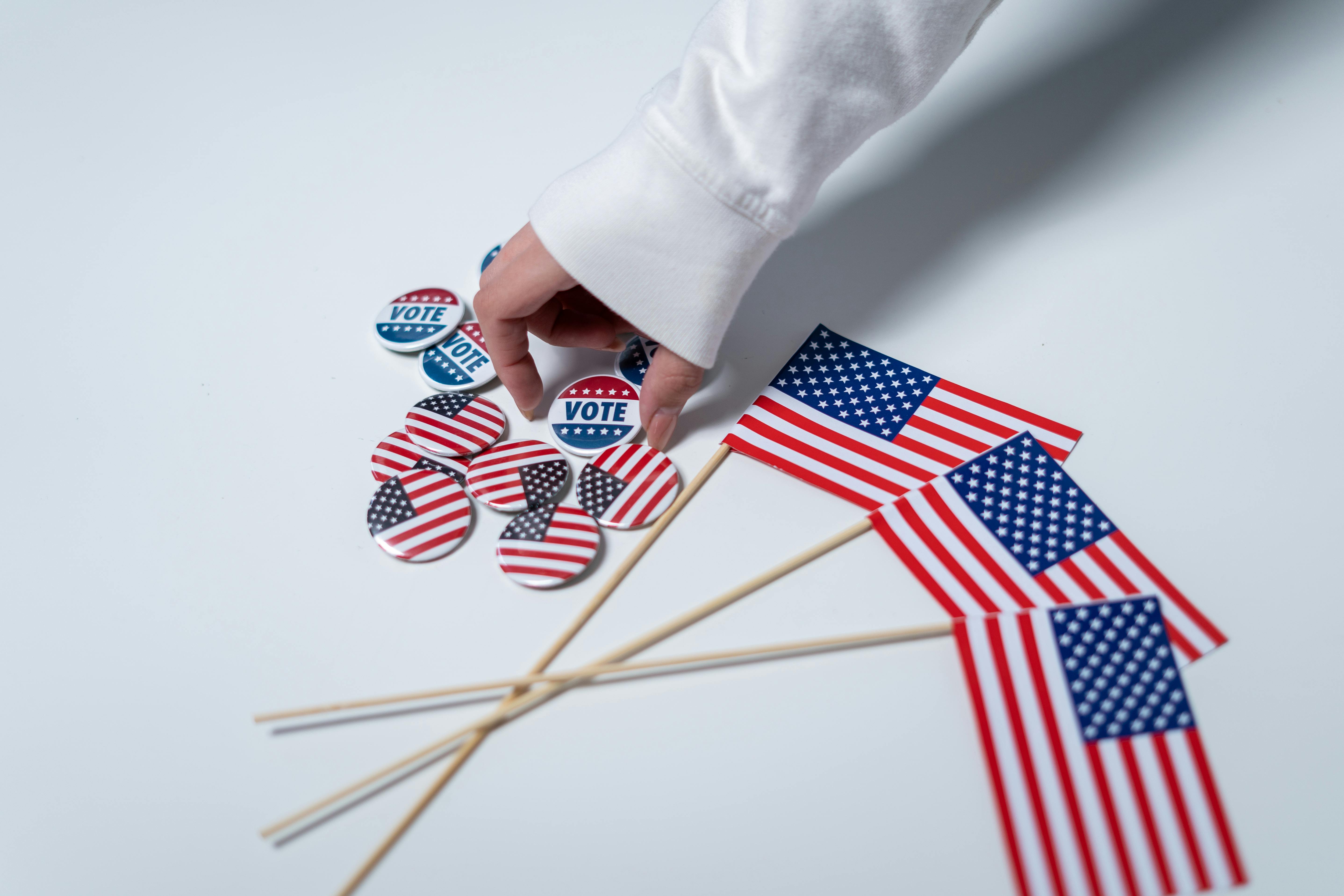
In today’s climate, everything is political even when it feels like it shouldn’t be. We were talking with some of our friends in the industry the other day, and they told us that Facebook ads were rejected for simply promoting a nonprofit that supported childhood hunger. Whether we like it or not, politics and political identity have a significant impact on our work, even if we’re talking about something nonpartisan.
Through our Voices for Good work, we dug into political identity and whether or not it impacted giving. What we found is that political identity does not determine generosity directly, but political identity does shape trust and comfort through how donors perceive politicization, transparency, and mission independence. What does that mean? Let’s break it down.

When we explored the connection between nonprofit giving and political identity, there was a clear takeaway: a majority of donors desire for neutrality. Even politically engaged donors demand proof of impact over flowery rhetoric. Donors across political affiliations value humanitarian focus over ideology with a clear majority (57%) preferring nonprofits stay visibly nonpartisan and mission-first. We also found that a portion of donors (11%) indicated they would withdraw support and another portion of donors (16%) said they would tune out when organizations seem politicized. That said, another segment of donors (16%) said they would give more when they felt the government failed to act.
Societally, we’re fatigued from all the political polarization, which has driven some donors away from causes that may be polarizing towards ones that are more faith-based or apolitical. When there is an independence from politics, confidence and willingness to donate increases.
How can your organization create an environment that’s agnostics of politics, and is open and transparent to donors of all parties?
Political beliefs shape trust in organizations, but not generosity itself. Donors across political ideologies reward apolitical (or perceived apolitical) nonprofits that demonstrate independence, mission clarity, and transparent results. To thrive across the divides, nonprofits must behave as neutral stewards of shared good—showing evidence before ideology and turning transparency into belonging.
Voices for Good, Brand Federation’s inaugural index that benchmarks donor behaviors and motivators, has uncovered a wealth of insights that create a picture of today’s nonprofit donor. Generated from the insights of over 500 nonprofit donors from around the country, Voices for Good provides nonprofit leaders and executives with proven findings and tangible action items for navigating the economic uncertainty of today, ensuring that donor relations and expectations aren’t just met, but exceeded.
Brand Federation fielded 512 in‑depth, semi‑structured interviews on EmpathixAI’s CultureChat platform. Built and overseen by PhD‑trained social scientists, CultureChat conducted large‑N qualitative interviews using a 17‑question guide that blended open‑ and closed‑ended prompts. Interviews totaled 213 hours of conversation. Transcripts were systematically coded and cataloged, combining expert-designed code frames with model-assisted classification to generate structured aggregates and prevalence estimates, which were reported in the Voices for Good Report. This approach preserves qualitative richness (what donors say and why) while enabling statistically defensible summaries across key demographics (e.g., gender, age, income, education, and religion/denomination).

Rian Chandler-Dovis is an accomplished researcher and brand strategist with two decades of experience helping organizations define what they stand for and deliver meaningful experiences. She has developed strategies for some of the world’s best-known brands, including MIT, Harvard Medical School, GM, American Express, Mercy Corps, Samsung, PepsiCo, the World Wildlife Fund, AB InBev, and Colgate.


