


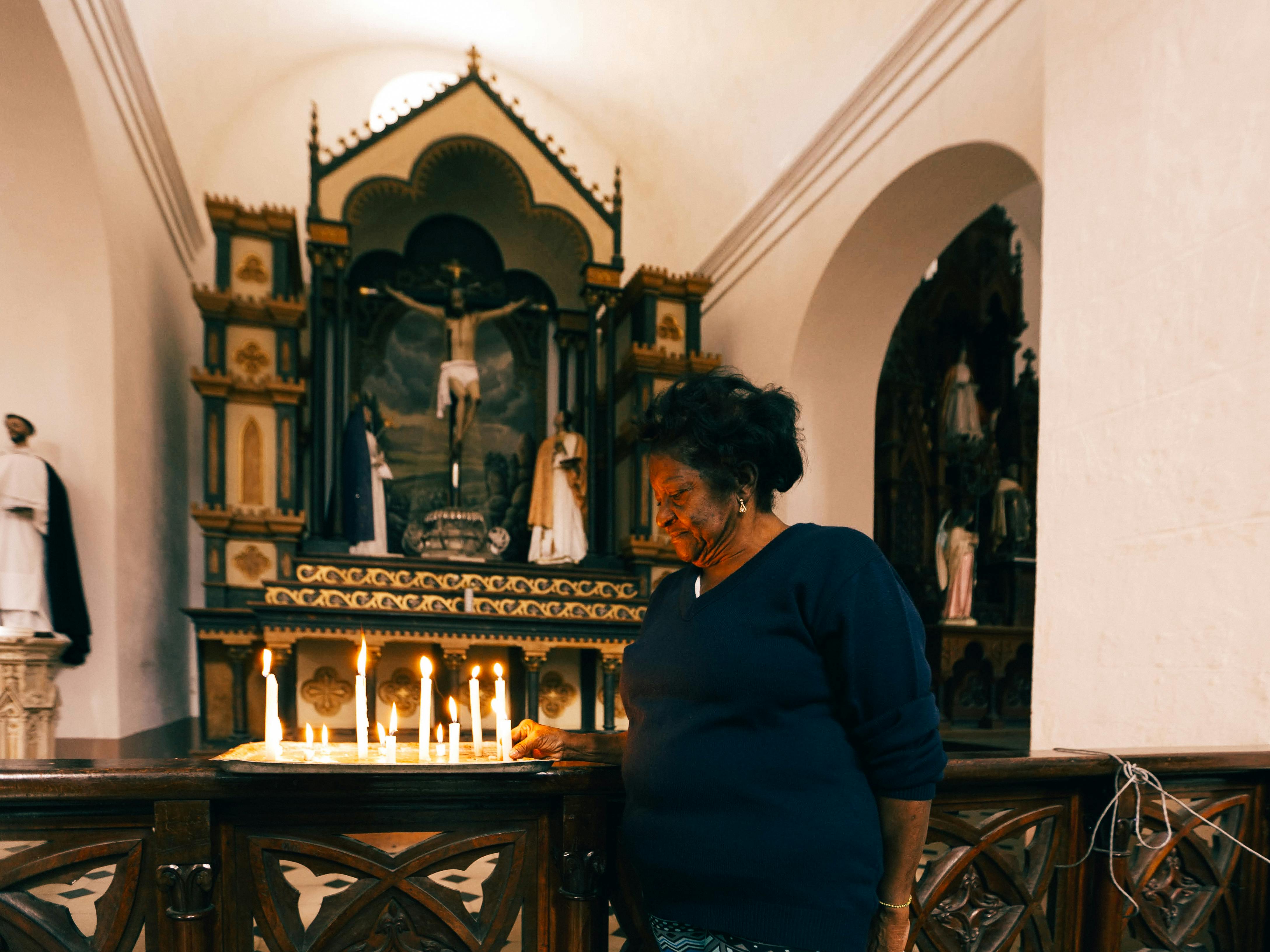
Faith deepens trust when donors see alignment between values and mission—while secular and multi-faith donors substitute institutional trust with personal discernment, evidence, and empathy. The strongest throughline is not theology but accountability. Faith shapes why donors feel moved to act, while transparency and proof determine where they follow through.
Through our Voices for Good work, we’ve extracted learnings about how religion and faith impact donor behavior, and how that motivation may vary between religious segments.

Even if your organization isn’t driven by faith or religion, there are some inherent tenets of faith that appear across the giving space. For example, faith deepens individual and community belonging. Religious networks reinforce loyalty, repeat giving, and local stewardship. It’s part of the nature of a faith-based institution to give to others and help those in need. However, we learned through Voices for Good that some segments within the faith community are nuanced, and that nuance is important to understand.
There is one overarching finding that’s important to highlight for this group: cause-first selection is universal, with 91-100% of respondents across faith segments choosing to donate to a particular issue before identifying an organization that addresses said issue. In most instances, local issues are going to be prioritized with faith-based donors, with international issues and environmental issues being lower on the consideration list.
There may be an assumption about this group, given the financial commitment some faith institutions have through tides and offerings, however, Voices for Good found that the notion of philanthropic giving wasn’t seen as an obligation. While there is a certain amount of religious duty among faith segments, particularly with Christian, Muslim and Jewish faith, it wasn’t an overwhelmingly significant finding from our study.
To help tailor communications across a variety of faith groups, the following profiles were generated from our Voices for Good index.
Evangelical Christian
Catholic
Protestant
Jewish
Muslim
Hindu/Buddhist
Atheist/Agnostic
Across each religious profile, there were five shared themes: trust, calling, preferred causes, transparency, and giving mode. With trust, secular donors want to see data, but with religiously driven donors, there is a faith component that helps to validate giving decisions. That is closely connected with the notion of a calling to give, it’s part of a duty to God and a service to others.
The third theme we observed across religious segments was preferred causes. There were a lot of commonalities with secular donors where both groups have a preference towards nonprofits that cover basic needs, but faith donors also prioritize family and local aid organizations (opposed to environmental or social justice organizations, for example). Transparency was a common theme Voices for Good unpacked, however, when it comes to religious donors, giving is framed more as a moral accountability, opposed to a rational one. Lastly, faith donors were more likely to have a planned, recurring, institution-tied giving mode, verses one that was more cause-triggered and flexible.
Faith influences the language of calling, not the logic of trust. Across religions, donors give where transparency and tangible outcomes meet moral conviction. Faithful donors seek alignment with spiritual duty and local service. Nonprofits that bridge faith and reason—pairing moral resonance with credible proof—can sustain confidence across an increasingly varied donor landscape.
To better understand today’s nonprofit donor, download our Voices for Good report.
Voices for Good, Brand Federation’s inaugural index that benchmarks donor behaviors and motivators, has uncovered a wealth of insights that create a picture of today’s nonprofit donor. Generated from the insights of over 500 nonprofit donors from around the country, Voices for Good provides nonprofit leaders and executives with proven findings and tangible action items for navigating the economic uncertainty of today, ensuring that donor relations and expectations aren’t just met, but exceeded.
Brand Federation fielded 512 in‑depth, semi‑structured interviews on EmpathixAI’s CultureChat platform. Built and overseen by PhD‑trained social scientists, CultureChat conducted large‑N qualitative interviews using a 17‑question guide that blended open‑ and closed‑ended prompts. Interviews totaled 213 hours of conversation. Transcripts were systematically coded and cataloged, combining expert-designed code frames with model-assisted classification to generate structured aggregates and prevalence estimates, which were reported in the Voices for Good Report. This approach preserves qualitative richness (what donors say and why) while enabling statistically defensible summaries across key demographics (e.g., gender, age, income, education, and religion/denomination).

Rian Chandler-Dovis is an accomplished researcher and brand strategist with two decades of experience helping organizations define what they stand for and deliver meaningful experiences. She has developed strategies for some of the world’s best-known brands, including MIT, Harvard Medical School, GM, American Express, Mercy Corps, Samsung, PepsiCo, the World Wildlife Fund, AB InBev, and Colgate.


